

About Mercury Consortium

The neutral common layer a fragmented energy industry needs and cannot build for itself: one certification of what a connected device does for the grid.

Why Mercury exists

A connected device only earns its keep when a utility or a flexibility platform can rely on it to act predictably. Today that reliance is built one integration at a time. A device certified for one utility often will not work with another, even when both run a common protocol like OCPP. Every market ends up solving the same problem alone, and every new partner starts the integration again.

Scaling flexibility now sits on the policy agenda in the UK, the EU, Australia, and California, and on the commercial agenda of every manufacturer, retailer, and platform. What has been missing is a uniform approach any of them can point to. A single company could write one, but a competitor will not adopt a rival's standard, and a regulator will not reference it.

Mercury Consortium exists to be that neutral core - the part every market needs to scale flexibility, owned by no single vendor. It certifies what a device does for the grid to a defined class, so the integration is done once and every Mercury-aligned utility or platform can rely on it. The end state Mercury is building toward is a grid that can scale flexibility as fast as devices are adopted, because connecting them is no longer the bottleneck.
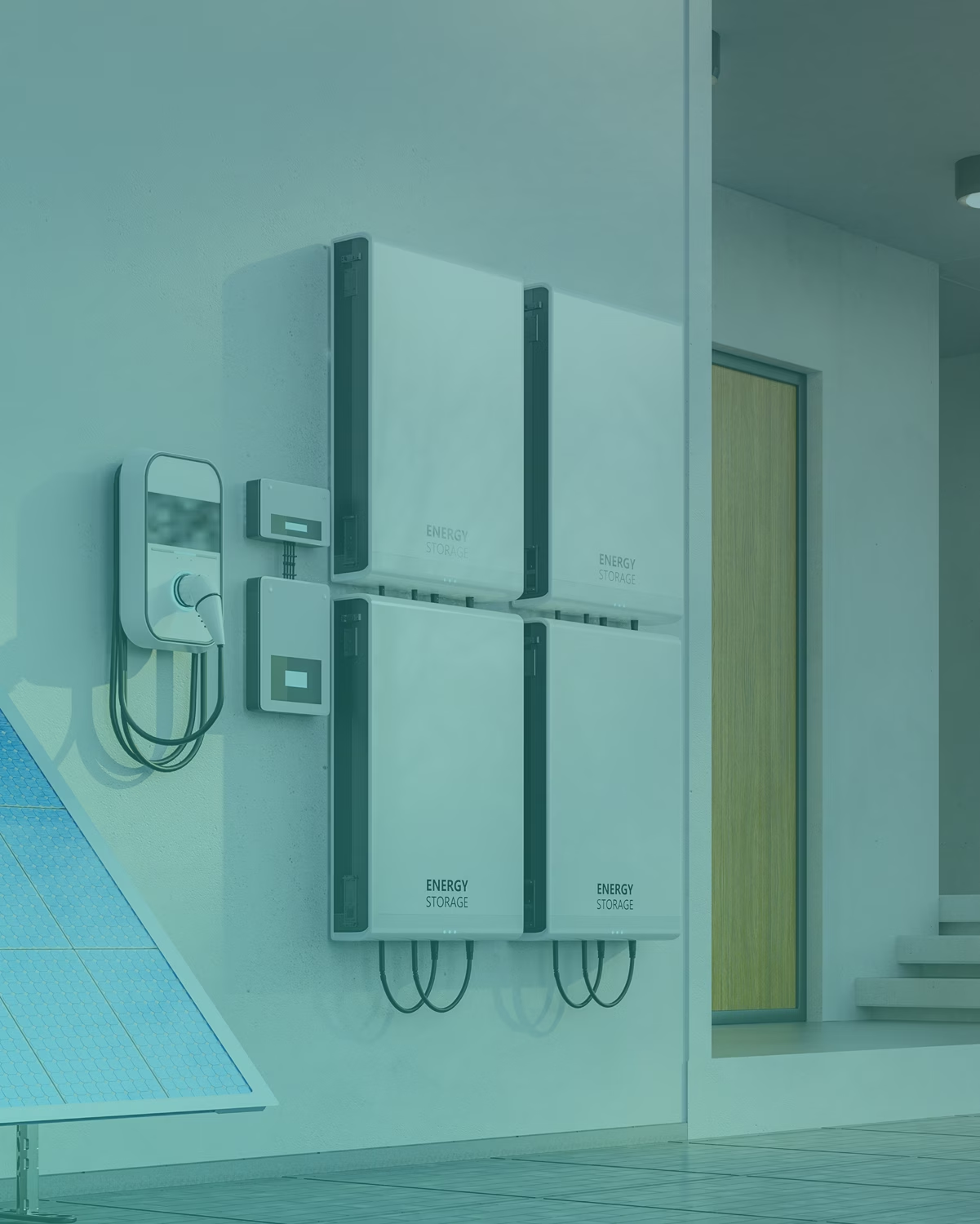
Wall-mounted energy storage batteries and a solar panel beside a modern building with stairs and a wooden door.
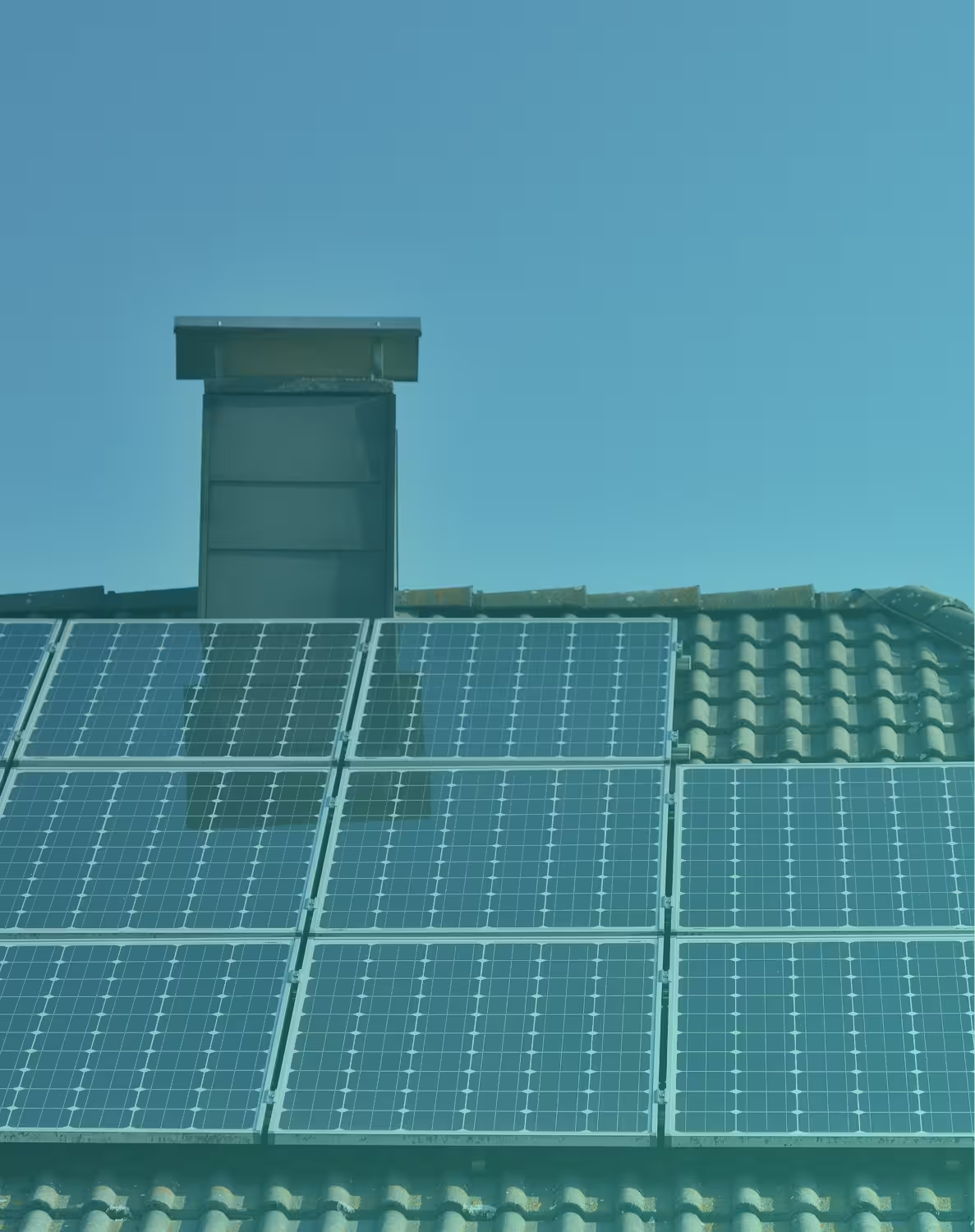
Solar panels installed on a tiled rooftop under a clear blue sky with a chimney in the background.

Building on established protocols

Mercury is not a protocol and does not replace one. It is the performance certification on top of the protocol a device already runs, including OCPP, OpenADR, IEEE 2030.5, and others.

Safety marks such as UL certify that a device is safe to operate. Protocol marks certify that it speaks the language. Consumer marks such as Matter certify that it pairs in the home. None of them certifies what the device actually does for the grid: how fast it responds, what it reports, how it handles issues. Mercury certifies that layer, by class, defining parameters like response time or accuracy.

Existing protocol work carries forward. Mercury pins down what the protocol leaves open, so a certified device behaves the same way with any Mercury-aligned counterpart instead of needing a fresh integration for every utility.

Frequently Asked Questions

What is the Mercury Consortium?

Mercury is a vendor-neutral, nonprofit consortium that certifies what smart-energy devices do for the grid. Mercury covers EV chargers, home batteries, heat pumps, solar inverters, and similar connected hardware. It certifies how fast a device responds, what it reports, and how it handles issues - to a defined performance class, on top of the protocols the device already runs.

Is Mercury a protocol like OCPP?

No. Mercury is a certification layer that sits on top of protocols such as OCPP and OpenADR, and it does not replace them. Where a protocol leaves room for interpretation, Mercury certifies what the device actually does for the grid: response time, telemetry, and fail-safe behaviour, defined by class. Existing protocol work carries forward, and a certified device behaves the same way with any Mercury-aligned counterpart.

Who backs Mercury?

Mercury is backed by EPRI, the Electric Power Research Institute, an independent nonprofit research organisation for the electricity sector. Its membership spans more than 30 organisations across the energy sector, ranging from retailers Octopus Energy and E.ON to OEMs and flex providers.

How is Mercury funded?

Mercury is a nonprofit funded by annual membership fees that scale with company revenue. Those fees fund the working groups, the certification tooling, and the development of the certification.

Get in touch

Considering Mercury membership? Let’s talk.